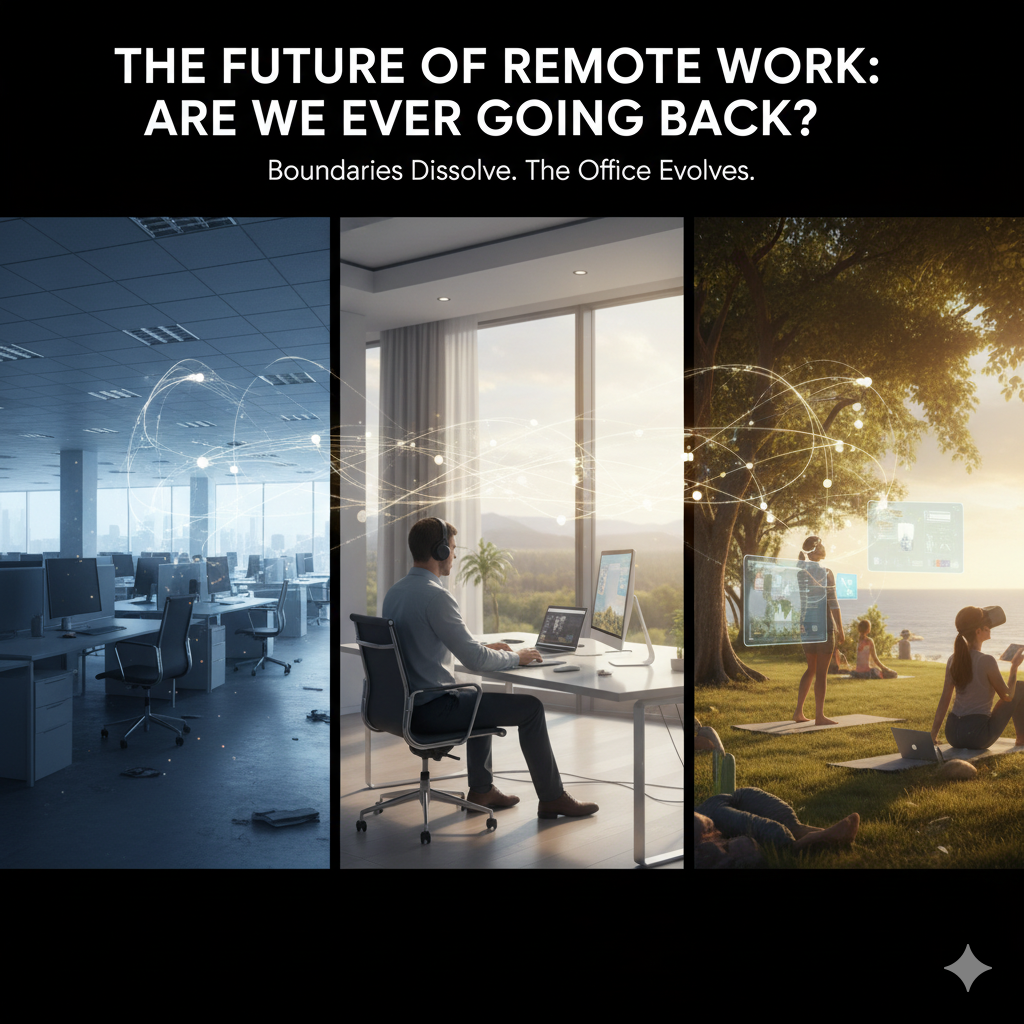
Remote work has undergone a rapid transformation in recent years, evolving from a niche working arrangement to a global norm. The COVID-19 pandemic forced millions of companies to adopt remote work overnight, and as restrictions have eased, the question remains: will we ever return to the traditional office, or is remote work here to stay?
The answer isn’t as simple as yes or no. The future of remote work is shaped by a combination of factors—technological advancements, changing workplace cultures, employee preferences, and the evolving demands of businesses. In this article, we’ll explore how remote work is expected to evolve, the advantages and challenges it presents, and what the workplace of the future might look like.
The Rise of Remote Work: A Quick Overview
Remote Work Before the Pandemic
Before the global shift caused by COVID-19, remote work was already gaining traction in certain industries. Tech companies, digital marketing agencies, and startups were leading the charge, offering flexible working arrangements to attract top talent. Remote work had long been seen as a perk for employees, offering them a better work-life balance and the freedom to work from anywhere.
However, it was still relatively uncommon in traditional office-based industries such as finance, law, and healthcare. Many companies adhered to the “traditional” 9-to-5 office model, seeing in-person collaboration as essential for productivity and innovation.
The Pandemic’s Impact on Remote Work
When the pandemic forced businesses worldwide to close their doors, remote work became an absolute necessity. Companies scrambled to provide their employees with the tools and infrastructure needed to work from home. The initial transition was chaotic, but as time went on, companies and employees started to realize that remote work was not only possible but also highly effective in many cases.
In fact, a survey conducted by Gallup in 2021 found that 56% of U.S. workers were working remotely either all or part of the time, and a large portion of employees expressed a desire to continue working remotely even after the pandemic. This marked a major turning point in the perception of remote work and its viability in the long run.
Is Remote Work Here to Stay?
The Benefits of Remote Work: Why Employees Don’t Want to Go Back
Remote work isn’t just a temporary trend; it offers numerous benefits that employees are reluctant to give up. Let’s take a look at some of the key reasons why many workers prefer remote work:
1. Flexibility and Work-Life Balance
One of the most significant benefits of remote work is the flexibility it offers. Employees can design their own schedules, which allows them to balance work with personal responsibilities, such as family time, exercise, or hobbies. This flexibility has led to improved job satisfaction and overall well-being for many remote workers.
2. Increased Productivity
Contrary to the belief that employees are less productive when working from home, studies have shown that remote workers often outperform their in-office counterparts. With fewer distractions, less time spent commuting, and the ability to create a personalized workspace, many employees report feeling more focused and productive when working remotely.
3. Reduced Commuting Time and Costs
Commuting can be one of the most stressful and time-consuming parts of a traditional office job. Remote work eliminates the need for daily commutes, saving employees hours each week and reducing stress. Not only does this free up time for personal activities, but it also reduces transportation costs and contributes to environmental sustainability by decreasing the carbon footprint.
4. Access to a Global Talent Pool
For employers, remote work opens up access to a wider and more diverse talent pool. Companies are no longer limited to hiring people who live in specific geographic locations. This has led to an increase in diversity and the opportunity to hire the best talent, regardless of location. It also allows businesses to scale faster, as they can hire employees across different regions without worrying about relocation expenses.
The Challenges of Remote Work: Is It Always Ideal?
While remote work offers many benefits, it’s not without its challenges. Some companies and employees have struggled with the shift to remote work, and not all industries are well-suited for a remote workforce. Here are some of the common challenges associated with remote work:
1. Feelings of Isolation and Loneliness
One of the most common issues faced by remote workers is feelings of isolation. Without the social interactions that come with working in an office, some employees experience loneliness and disconnect from their colleagues. This can lead to lower morale and mental health challenges, especially for individuals who live alone or have limited social networks.
2. Difficulty in Collaboration and Communication
While technology has made it easier than ever to stay connected, remote work can still pose challenges when it comes to collaboration and communication. In-person meetings and spontaneous interactions in the office help foster creativity and problem-solving. Remote work requires more intentional communication, and the lack of face-to-face interaction can lead to misunderstandings or delays in decision-making.
3. Managing Work-Life Boundaries
While remote work offers flexibility, it can also blur the boundaries between work and personal life. Many remote workers struggle with “always being on,” as they feel the pressure to respond to emails and messages outside of traditional working hours. This can lead to burnout and difficulty in maintaining a healthy work-life balance.
4. Technological Issues and Security Concerns
Not all employees have access to the ideal technology or home office setup needed to be productive. Additionally, remote work often involves handling sensitive company data, which can pose cybersecurity risks if proper measures aren’t in place. Companies need to ensure that their remote workforce has access to secure networks and devices to protect against data breaches.
Hybrid Work: The Middle Ground
The Rise of Hybrid Work Models
As the future of remote work continues to unfold, many companies are adopting a hybrid work model. This model combines the flexibility of remote work with the benefits of in-person collaboration. Hybrid work allows employees to work from home part of the week while also coming into the office for meetings, brainstorming sessions, or team-building activities.
This hybrid approach has gained popularity because it provides the best of both worlds. Employees can enjoy the flexibility and productivity of remote work while still benefiting from the collaborative environment that in-person office work offers. It also addresses some of the challenges of remote work, such as isolation and the lack of face-to-face interaction.
Why Hybrid Work Could Be the Future
- Flexibility: Employees can choose where they work based on the task at hand, with some tasks being more suited for remote work and others benefiting from in-person collaboration.
- Collaboration: In-person interactions remain crucial for fostering creativity and team cohesion. Hybrid work allows for scheduled in-office days where employees can collaborate, brainstorm, and build relationships.
- Employee Satisfaction: Hybrid work models have been shown to improve employee satisfaction, as they give workers more control over their work environment and schedule.
How Hybrid Work Could Evolve
The hybrid model is still in its infancy, and it will likely continue to evolve over the coming years. Companies may experiment with different hybrid structures, such as flexible in-office days or a set number of days employees must be present in the office each week. Additionally, hybrid work may shift towards more remote-first companies, with in-office work becoming less of a priority as the world adapts to a digital-first workplace.
What Does the Future of Remote Work Look Like?
The Role of Technology
Technology will continue to play a critical role in shaping the future of remote work. Advancements in artificial intelligence, virtual reality (VR), and augmented reality (AR) will create new ways for teams to collaborate, brainstorm, and interact. Virtual offices may become a reality, where employees can work in a fully immersive digital environment, simulating the experience of being in the same room.
Additionally, the tools used for remote work—such as video conferencing platforms, project management software, and cloud-based applications—will continue to evolve. These tools will become more integrated and intelligent, enabling seamless communication and collaboration, regardless of location.
Changes in Corporate Culture
As remote work becomes more prevalent, corporate culture will likely shift. Companies will need to adapt their approaches to leadership, performance management, and employee engagement. Trust and results-based work will become even more important, as remote work demands a greater focus on autonomy and accountability.
Organizations will also need to invest in mental health and well-being programs to support remote workers who may feel isolated or overwhelmed. Additionally, companies will have to find new ways to build camaraderie and foster a sense of belonging for their remote teams.
The Global Shift Towards Remote-First Workplaces
In the coming years, more companies may adopt a remote-first approach. This means that instead of seeing remote work as a temporary solution, they will build their operations around it. This shift could lead to the growth of “digital nomad” cultures, where employees work from anywhere in the world, with no expectation of returning to a traditional office.
Many companies have already adopted remote-first policies and found success. This trend is expected to grow, particularly in industries like tech, marketing, and creative fields, where the work can be done from virtually anywhere with an internet connection.
Conclusion: Are We Ever Going Back to the Office?
The future of remote work is anything but predictable. While some companies may opt to return to fully in-person work, many are embracing hybrid models, and others are making remote work a permanent fixture. The question isn’t necessarily “Are we going back to the office?” but rather “How will the office evolve in the future?”
Remote work is here to stay, but the way we work will continue to evolve in response to technology, employee needs, and business goals. The office may not look the same in the future, but with the right balance, remote work can offer a sustainable, flexible, and productive solution for both employees and employers alike.
As we move forward, it’s clear that the future of work will be shaped by flexibility, autonomy, and collaboration. Whether fully remote, hybrid, or somewhere in between, the key is finding a working model that works for everyone.