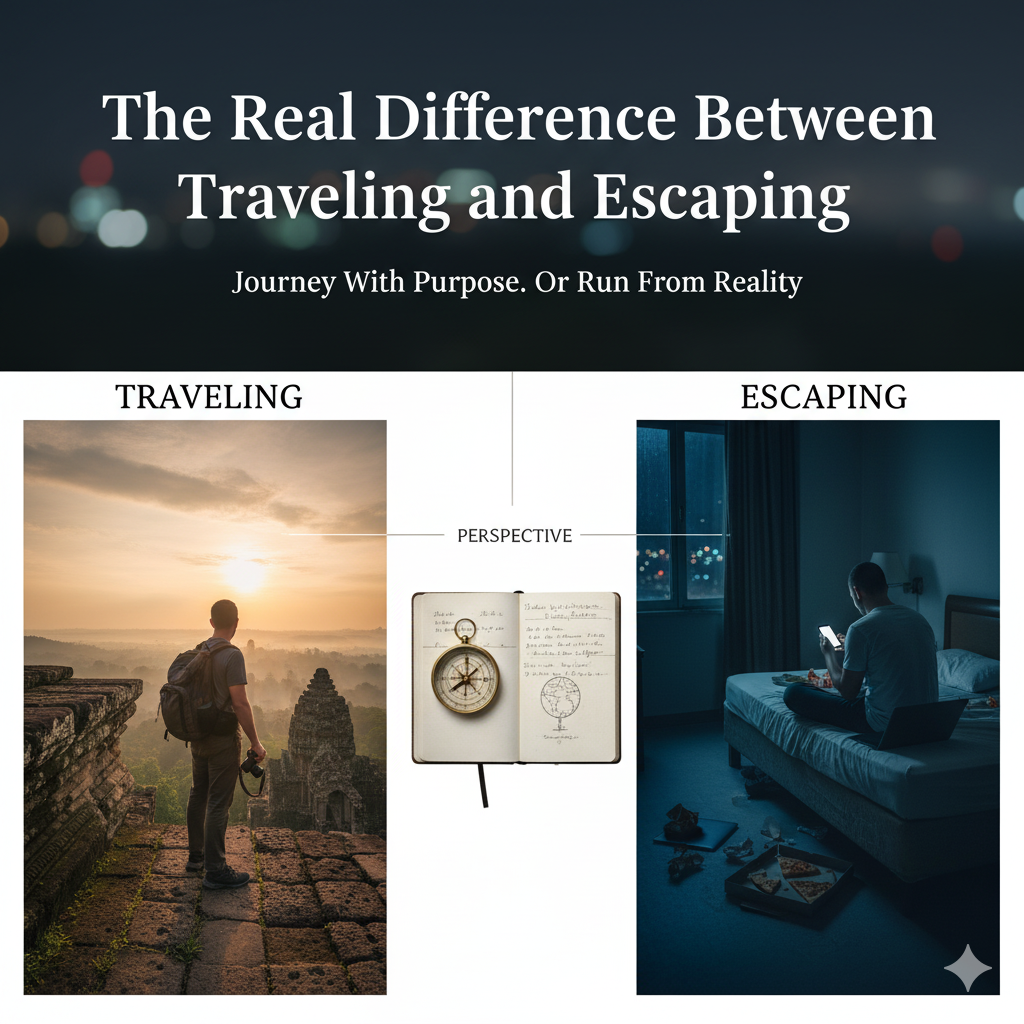
Traveling and escaping are terms often used interchangeably, yet they carry distinct meanings, goals, and experiences. While both involve leaving our familiar environments, their motivations, intentions, and outcomes differ. One is about discovery, growth, and exploration, while the other is driven by a need to run away, hide, or take a break from personal challenges. In this article, we’ll delve into the real difference between traveling and escaping, highlighting how these two concepts can shape our experiences and perspectives.
Understanding Traveling vs. Escaping
Before we dive into the specific differences, let’s first define what we mean by traveling and escaping.
What Does Traveling Really Mean?
Traveling is often associated with exploration, adventure, and cultural immersion. It involves journeying to new or distant places to experience something different. Traveling typically has a purpose—whether it’s leisure, business, education, or a combination of these factors.
The essence of traveling lies in learning, experiencing new cultures, meeting new people, and gaining a fresh perspective on life. Traveling allows you to broaden your horizons, try new activities, and make memories that enrich your life. It can be a form of self-discovery, a chance to reconnect with nature, or simply a way to unwind and break from routine.
What About Escaping?
Escaping, on the other hand, has a more emotional and psychological connotation. When people talk about escaping, they often refer to leaving behind something they’re trying to avoid or run away from. It could be an escape from stress, overwhelming emotions, or the pressures of everyday life. The key aspect of escaping is that it often involves a desire to avoid or hide from something rather than facing it head-on.
Escaping might involve running away from personal problems, unresolved issues, or overwhelming feelings. People often turn to escape when they feel unable to cope with their current situation or when they simply need a break from their responsibilities.
While both traveling and escaping involve physical movement or a change in scenery, escaping is often more about relief, while traveling is about discovery and experience.
The Key Differences Between Traveling and Escaping
Now that we have a basic understanding of both concepts, let’s explore the key differences between traveling and escaping.
Intentions and Motivations
Traveling: A Journey of Discovery
One of the most significant differences between traveling and escaping is the intention behind the trip. When we travel, our motivation is often to explore something new, broaden our knowledge, or grow as individuals. The idea is to learn, challenge ourselves, and be immersed in different cultures or environments.
For instance, a trip to Italy for a cooking class, or to Japan to experience its traditions, is about diving into a culture, understanding its history, and trying something new. Traveling can be intentional, whether for leisure, education, or personal growth. It’s about experiencing the world with open eyes and mind, actively seeking out new experiences.
Escaping: A Reaction to Stress
Escaping, however, is more reactive than proactive. When we escape, it’s usually because we feel overwhelmed, trapped, or burdened by responsibilities or emotions. The intent behind an escape is not necessarily about discovery or personal growth, but rather about stepping away from an unpleasant reality.
Escaping can involve running away from personal issues, such as work stress, relationship difficulties, or even mental health struggles. It might not always be about the destination but more about seeking temporary relief from feelings of burnout, frustration, or confusion. For example, someone might escape to a remote beach resort to forget about the pressures of their job or personal life, but they may not be looking for anything new or enriching. They simply want to “get away.”
Emotional and Mental Impact
Traveling: The Power of Transformation
The emotional and mental impact of traveling is generally positive. Traveling can be a transformative experience. It challenges our perspectives, forces us to adapt to new environments, and helps us discover things about ourselves that we never knew before. It promotes personal growth, self-awareness, and deeper empathy towards others.
For instance, meeting people from different backgrounds can lead to a greater understanding of global issues and diverse viewpoints. Traveling can also be a means of self-reflection. Time away from the daily grind allows us to pause, reflect, and recharge.
Moreover, traveling often promotes a sense of accomplishment and fulfillment. Exploring new cities, hiking through beautiful landscapes, or even trying new foods can offer feelings of joy and satisfaction that contribute to our emotional well-being.
Escaping: Temporary Relief, But No Resolution
On the flip side, escaping offers temporary relief, but it rarely provides long-lasting resolution or healing. Escaping tends to be a form of avoidance rather than engagement. While it might help you to feel better for a short period of time, the problems you’re trying to escape from often remain unresolved once the escape is over.
For example, a weekend getaway to relax might help you decompress, but the pressures of work or personal life will likely return once you’re back home. Escaping doesn’t typically offer a path to resolving the underlying issues, and this can lead to a cycle of needing to escape again and again.
Escaping can sometimes even exacerbate feelings of dissatisfaction because it postpones dealing with personal struggles. When the emotional baggage isn’t addressed, it can result in a sense of emptiness or confusion when the escape ends.
The Length and Nature of the Experience
Traveling: Planning and Preparation
When we travel, there’s often an element of planning and anticipation involved. Traveling is a commitment—whether it’s a weekend getaway, a week-long holiday, or an extended backpacking adventure. We spend time researching destinations, booking accommodations, and preparing for the experiences we want to have. This preparation can be exciting and fulfilling in itself.
Traveling can involve diverse activities, and it often includes a mix of relaxation, exploration, and learning. You might hike up a mountain in the morning, visit a museum in the afternoon, and enjoy a delicious local dinner in the evening. Each moment is an opportunity to learn and grow.
Moreover, traveling often requires us to step out of our comfort zones. It could involve overcoming language barriers, navigating unfamiliar environments, or simply trying new things. These challenges make the travel experience enriching and memorable.
Escaping: The Need for Immediate Relief
Escaping, on the other hand, is typically more about finding immediate relief. There’s little to no planning involved when you’re simply trying to “get away.” You might book a last-minute trip, head to a nearby town for the weekend, or take a break from your regular routine. The nature of the experience is usually shorter, as the goal is not long-term exploration or growth, but temporary relief from stress or anxiety.
Escaping is often impulsive and driven by a need to find quick relief from overwhelming emotions. It’s less about exploration and more about disconnecting, if only for a short while.
The Aftermath: What Happens After the Experience?
Traveling: Long-Term Benefits
The aftermath of a travel experience is typically positive. After a trip, you return with new memories, knowledge, and often a renewed sense of purpose or motivation. Traveling offers a long-lasting impact because it helps shape who we are. We return home feeling more open-minded, relaxed, and appreciative of the world around us.
Even if a trip involves some challenges or discomforts, those experiences tend to lead to personal growth. Traveling forces us to think critically, be resourceful, and adapt to new circumstances, which enriches our lives long after we return.
Escaping: The Return to Reality
On the contrary, escaping can leave you feeling disoriented or even more stressed when you return. Since the escape doesn’t address the root cause of your stress or anxiety, you may find that you return home only to face the same challenges and pressures you left behind.
The escape might offer temporary comfort, but the underlying problems often remain, creating a sense of dissatisfaction or even regret once the temporary relief fades. If you constantly rely on escaping, you may find that the cycle repeats itself without ever providing a permanent solution to your issues.
Conclusion: Which One Are You Seeking?
Both traveling and escaping serve valuable purposes, but they cater to different emotional needs and life circumstances. If you’re looking for growth, exploration, and a chance to experience something new, traveling is the path to take. It’s about embracing new opportunities and learning from the world around you.
On the other hand, if you’re simply trying to temporarily alleviate stress or escape from a difficult situation, escaping might offer the quick relief you’re seeking. However, it’s important to recognize that escaping doesn’t solve the underlying issues—it just provides a temporary break.
Ultimately, the real difference between traveling and escaping is about intention, impact, and long-term fulfillment. If you want to enrich your life and broaden your horizons, traveling is the way forward. But if you need to hit pause and catch your breath, an escape may offer the relief you need—just be mindful of why you’re choosing to step away.
So, whether you’re packing your bags for a new adventure or seeking a brief respite from your daily routine, it’s essential to understand the motivations behind your journey and how it will impact your emotional and mental well-being.
Suspicious activity detected
It looks like someone else may be using your ChatGPT account. Please secure your account to regain access to all features. Learn more.
ChatGPT can make mistakes. OpenAI doesn’t use oxaam.com workspace d